
The challenge
An acid treatment with acid gel was performed without prior simulation which resulted in lower production and economical improvements than expected. This case shows post-job analysis by simulation in WellStim, including production and NPV optimization.
-
Area: North Europe
-
Reservoir: Oil Carbonates
-
Depth: MD – 13,100 ft, TVDSS – 8956 ft
-
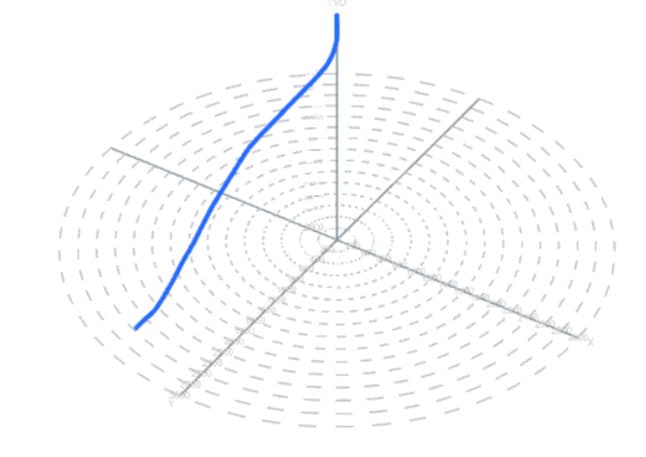
Wellbore completion: slanted well completed with liner
The solution
The production decline trend for 5 years was set and the design was calculated based on the actual acid treatment schedule.
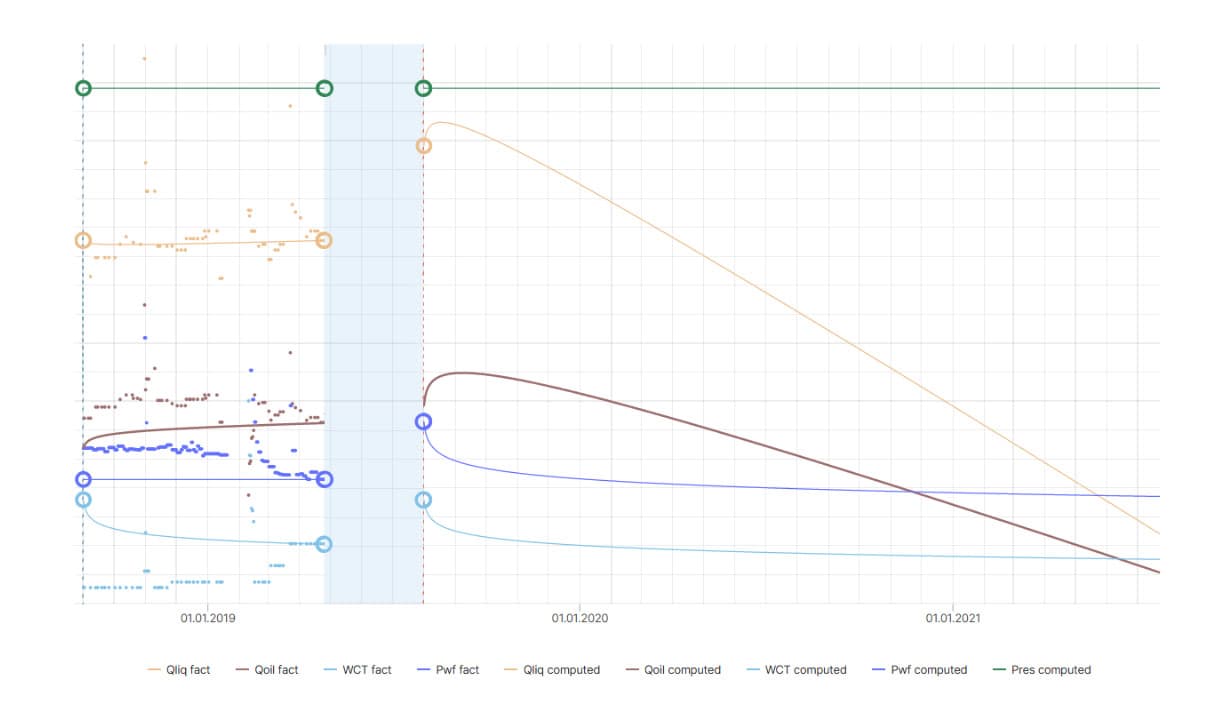
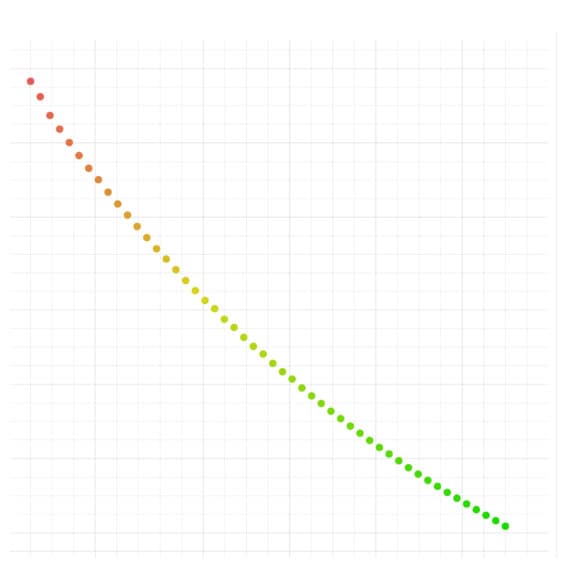
The pumping schedule was optimized to increase the efficiency of acid treatment. The following relationship charts were produced:


Optimization resulted in the following adjustments:
- Reduce the number of acid and acid gel stages
- Decrease the acid volume to 15,840 gal in two stages (7,920 gal + 7,920 gal)
- Pump acid gel before acid, not after
- Increase the acid gel volume to 15,840 gal in two stages (13,200 gal + 2,640 gal)
The results
WellStim optimization improved acid coverage, increased oil production and NPV.
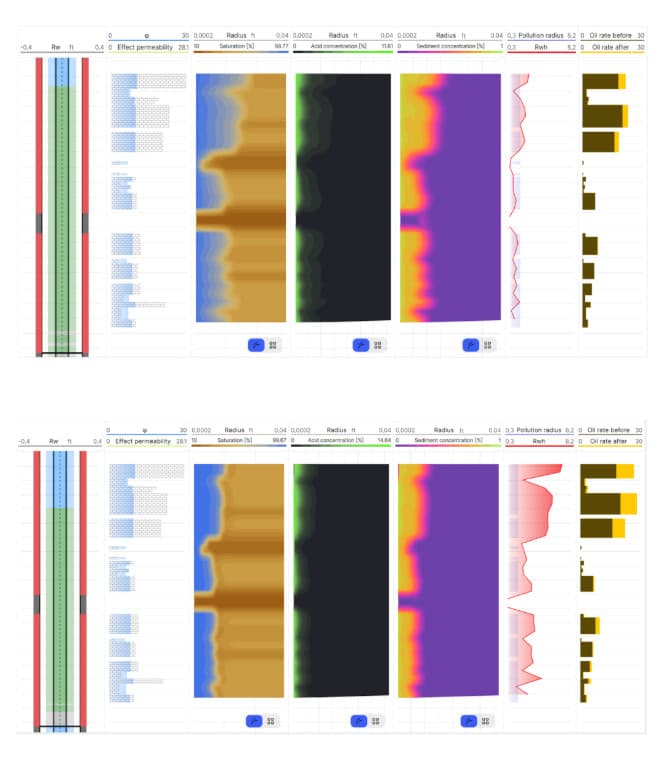
| Parameter | Actual, not optimized | Optimal design |
|---|---|---|
| Oil rate, bbl/day | 815 | 996 |
| Skin | -1.1 | -2.1 |
| NPV, ‘000 USD | 354 | 1532 |
| Additional oil production over 14 months, ‘000 bbl | 31 | 114 |
| Max wormhole depth, ft | 2.7 | 7.0 |
The optimal design was calibrated based on the actual trend of post-stimulation production decline.
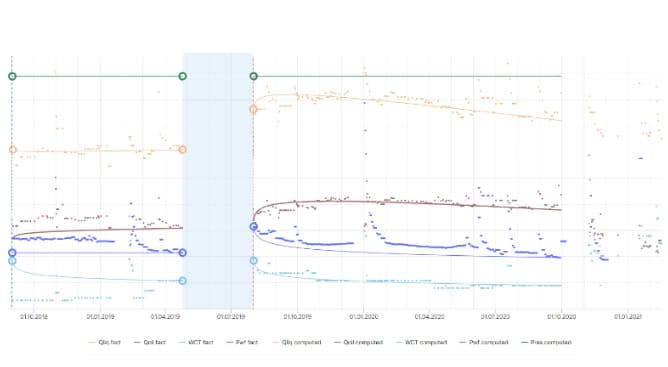
| Parameter | Actual, not optimized | Optimal design |
|---|---|---|
| NPV, ‘000 USD | 978 | 2335 |
| Additional oil production over 14 months, ‘000 bbl | 73 | 170 |